Your First Visit
 Athens EyeCare Clinicathenseyecare.gr · (+30) 210 777 8515
On this page
A first visit to an eye clinic goes more smoothly when you know what to expect. This page covers how to find us, what to bring, what happens during the examination and what to plan for afterwards. If anything is unclear, call us before you come.
Before you come
What to bring
- Your current glasses, and your contact lenses with their box or prescription if you wear them.
- A list of the medicines you take, including any eye drops, with the doses.
- Any previous eye reports, scans or letters from other doctors, even old ones.
- A referral letter, if your GP or another specialist sent you.
- If you intend to claim the visit from a private insurer, the policy details they will ask you for. The clinic accepts credit and debit cards and contactless payment.
Contact lens wearers
Soft lenses can change the shape of the cornea slightly, which affects measurements such as a glasses prescription or a laser-surgery assessment. Unless we tell you otherwise, wear your glasses instead of your lenses on the day of the visit, and bring the lenses with you.
Children
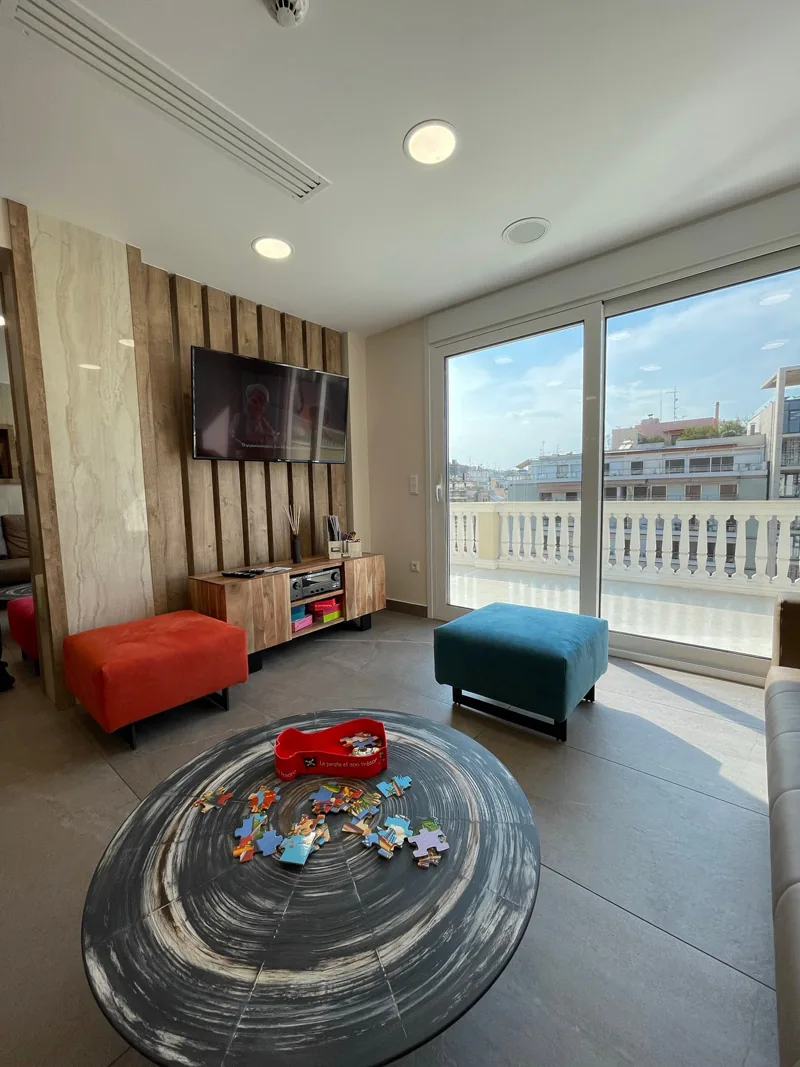
Children are examined through play and pictures rather than letters, so there is nothing to practise beforehand. A child who has eaten and is not too tired copes far better with the visit. Bring a favourite toy or book, and tell us in advance if your child has a condition or disability we should plan around.
Getting here
The clinic is at 110 Vasilissis Sofias Avenue, on the 6th floor, opposite the Megaro Mousikis concert hall. The building entrance is on the avenue itself.
- Metro: Megaro Mousikis station on Line 3 is directly across the avenue. This is the easiest way to reach us.
- Bus and trolleybus: many routes run along Vasilissis Sofias and stop near the Megaro Mousikis.
- Car: street parking in this part of Athens is limited and metered; there are paid multi-storey car parks within a few minutes' walk. If you have been given dilating drops you should not drive home in any case, so consider public transport or a taxi.
Take the lift to the 6th floor and give your name at reception. If you are running late, call us so we can rearrange the order of appointments.
What happens during the examination
A first examination is thorough. Depending on the reason for your visit it usually includes:
- a conversation about your symptoms, your general health and your family history of eye disease;
- measurement of your vision with and without correction, and of your glasses prescription;
- measurement of the pressure inside the eye;
- examination of the front and the back of the eye at the slit lamp;
- where needed, imaging such as OCT, fundus photography, corneal topography or a visual field test, which are all done in the clinic on the same visit.
The doctor explains the findings at the end of the visit and, if treatment is needed, discusses the options with you. You will receive a written report. Ask as many questions as you like; it is easier to make good decisions when you understand your condition.
Dilating drops
To examine the retina properly the doctor often needs to widen the pupil with drops. The drops sting for a few seconds and take about 20 to 30 minutes to work. Afterwards your near vision is blurred and bright light is uncomfortable for a few hours. For that reason:
- do not plan to drive home after the visit;
- bring sunglasses;
- if you can, come with someone, especially for a first visit;
- plan to be unable to read or work on a screen for the rest of the afternoon.
In children the drops used are stronger and can blur near vision until the next day.
How long to allow
Allow one to two hours for a full first examination, longer if dilating drops or several imaging tests are needed. A routine follow-up is usually shorter.
After the visit
You leave with a clear explanation of what was found, a written report, and a plan: a prescription, a treatment, a follow-up date, or simply reassurance. If a procedure or an operation is recommended, we go through the preparation, the risks and the recovery with you before anything is booked, and you take the time you need to decide.
If you have questions after you get home, call or email us. For anything urgent during opening hours, call the clinic directly; we keep appointments free every day for emergencies.
Languages
Our doctors trained and practised in the United Kingdom and other European countries, and consultations are available in Greek and English. If you are travelling to Athens for treatment, see our page for international patients.