YAG laser Capsulotomy
 Athens EyeCare Clinicathenseyecare.gr · (+30) 210 777 8515
On this page
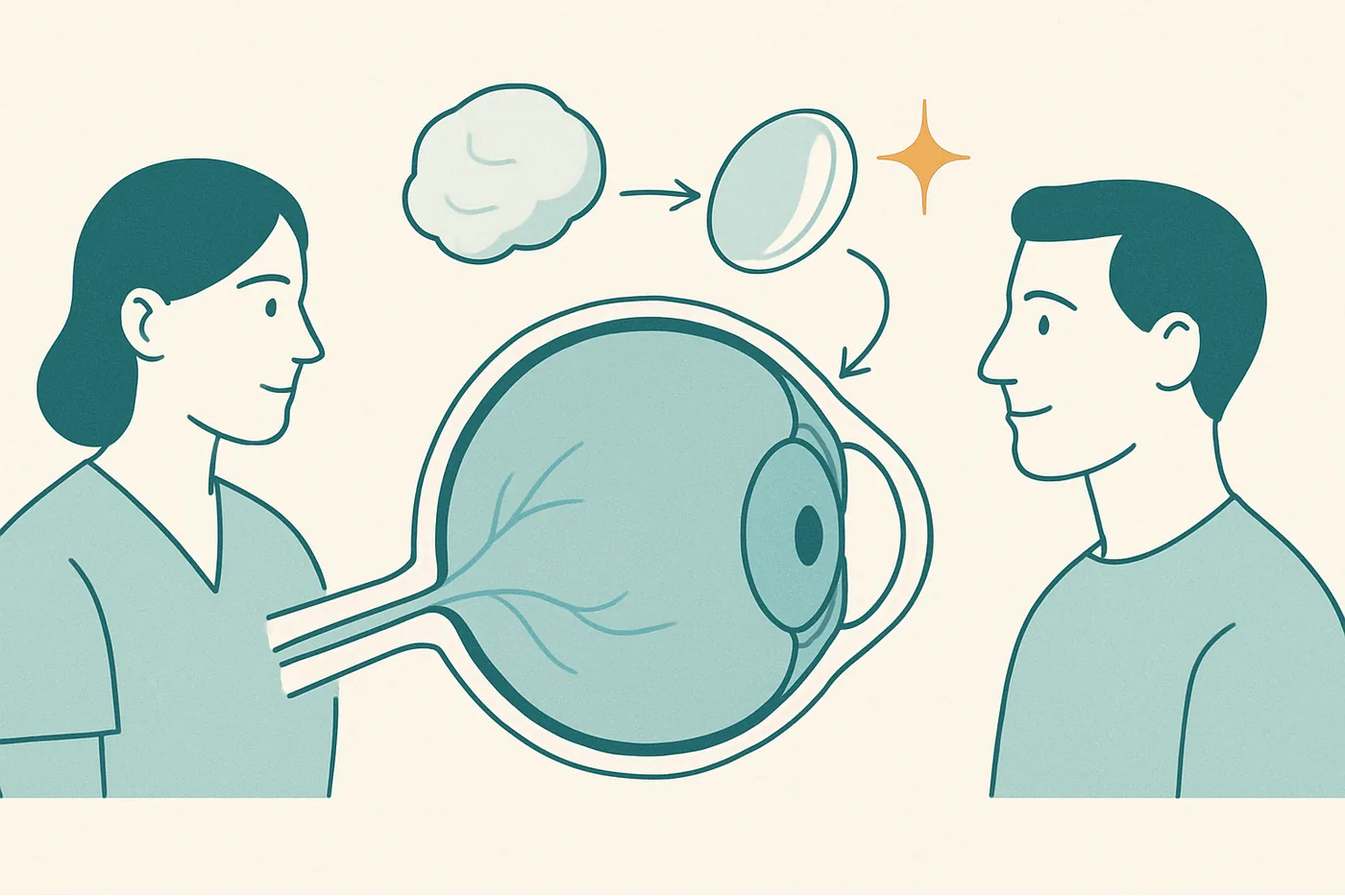
Posterior Capsule Opacification (PCO) is a relatively common occurrence after cataract surgery, but it is easily treatable. Sometimes the back (posterior) of the lens capsule — the membrane that holds your artificial lens in place — becomes thickened. This thickening means less light can travel through to the retina (the light-sensitive layer at the back of your eye), so your sight may become cloudy or blurred, or you may have problems with bright lights and glare. Current studies show that this can occur in 10-20% of patients at any time after surgery.
If this happens, laser treatment can make your vision clear again. This type of laser is safe and has very few complications. Using a YAG laser, a small opening is made in part of the back of the lens capsule so that light can once again pass directly to the retina. For the vast majority of people, this improves vision.
What happens before YAG laser treatment?
Your vision will be checked and your intraocular pressure measured. Drops are then instilled to dilate the pupil; these can take up to 30 minutes to work. The retina at the back of the eye is examined to make sure there are no other problems.
The benefits and the possible complications of the treatment will be discussed with you before you sign the consent form. The procedure itself takes only about five to ten minutes.
How is the YAG laser treatment carried out?
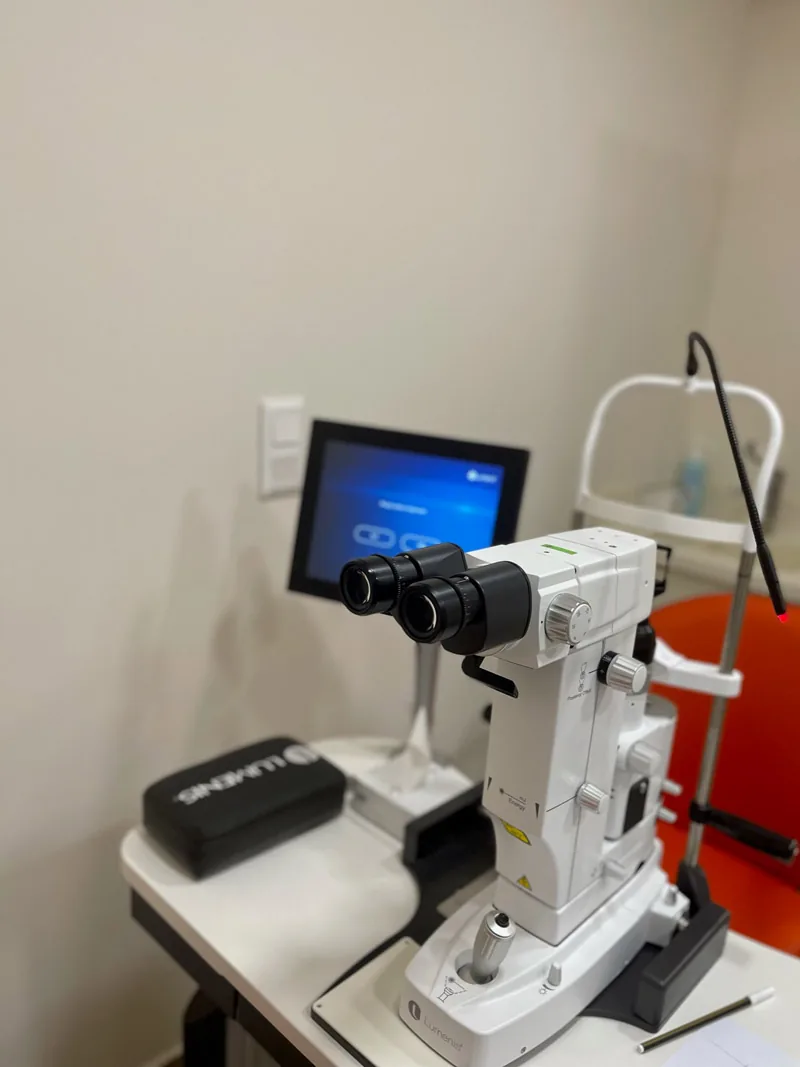
The laser treatment is painless and is carried out while you sit at a machine similar to the one used to examine you in the clinic.
Local anaesthetic drops will be given, and a contact lens may be placed on your eye to steady it and focus the laser beam. The laser light itself is invisible, but a bright light is used so that the capsule can be seen. Each laser pulse lasts a fraction of a second, accompanied by a loud clicking sound.
What happens after YAG laser treatment?
The laser creates an opening in the opaque membrane behind the implant, allowing light to reach the retina and bringing vision back to the level it was at before the membrane became cloudy. It may take several days for your vision to be fully restored, and you may be given drops to use after the procedure.
We advise you not to drive yourself home after the procedure, as the dilating drops can take some time to wear off and your vision may still be blurry following the laser. Please make alternative travel arrangements. Because the treatment requires no incisions or stitches, you can normally return to your daily activities straight away.
What are the risks of YAG laser treatment?
The laser procedure is considered very safe. Although there are some risks, serious side effects are very rare. If a contact lens is used, your eye may feel a little sore after the treatment, but this should soon wear off.
Common complications:
- In some people, laser treatment for PCO causes a brief rise in eye pressure. If your doctor is concerned about this, they will check your eye pressure shortly after the treatment; if it has increased, you will be given eye drops or a tablet to bring it back down.
- Inflammation inside the eye — this is uncommon and responds rapidly to anti-inflammatory drops.
- Floaters — harmless clumps of cells that move around inside the vitreous (the jelly-like substance that fills the inside of the eye). You may see them as dots, circles, lines, clouds or cobwebs.
Rare but serious complications:
- Retinal damage
Rarely, the laser can cause a retinal detachment, which may occur days, weeks or months after the treatment and is more likely if you are very short-sighted. It is important to stress that these are extremely rare complications of the laser treatment: the vast majority of people gain an excellent improvement in their vision without experiencing any problems. If you have any concerns, the clinician performing the procedure will discuss them with you and will also describe the symptoms of retinal detachment. Please be aware, too, that retinal detachment surgery is normally very successful in preserving or restoring good vision.
Damage to the intraocular lens: minor scratches are occasionally unavoidable, but they very rarely cause visual problems.
What if I have a problem when I get home?
Please contact Athens EyeCare Clinic if you experience any of the following:
- Pain that is not relieved by your usual painkillers.
- Noticeable redness in your eye.
- Worsening sight.
- Flashing lights or a shadow or curtain in your vision.