
Blepharoplasty
 Athens EyeCare Clinicathenseyecare.gr · (+30) 210 777 8515
On this page
What is Blepharoplasty?
Blepharoplasty is a cosmetic procedure that removes excess skin or fat from the eyelids. As skin ages it loses its elasticity; in some people this causes drooping (ptosis) of the upper eyelids and the formation of deep folds, while bags may appear on the lower lids. The loss of natural elasticity also allows the fat around the eyes to protrude, adding to the appearance of bagginess. Blepharoplasty, sometimes referred to as eyelid reduction, reshapes the eyelids. This not only improves their appearance but can also restore the field of vision where the eyelids have drooped far enough to obstruct the central visual axis. Blepharoplasty can be performed on the upper eyelids, the lower eyelids or both, and for functional as well as aesthetic reasons.
How do I know if I need blepharoplasty?

There are many reasons to consider blepharoplasty. Beyond the obvious case of excess skin interfering with vision, the procedure can be performed to reduce the signs of ageing, refresh the appearance or — where the eyelids droop excessively — widen the range of peripheral vision.
You might consider the procedure if you have:
- Loose or droopy upper eyelids
- Excess skin on the lower eyelids
- Sagging upper eyelids that affect your field of vision
- Pronounced bags and wrinkles under the eyes
Some people develop bags under the eyes in young adulthood – even before any signs of skin ageing appear. In certain cases, an oculoplastic surgeon may recommend a brow lift in combination with blepharoplasty.
What happens during blepharoplasty?
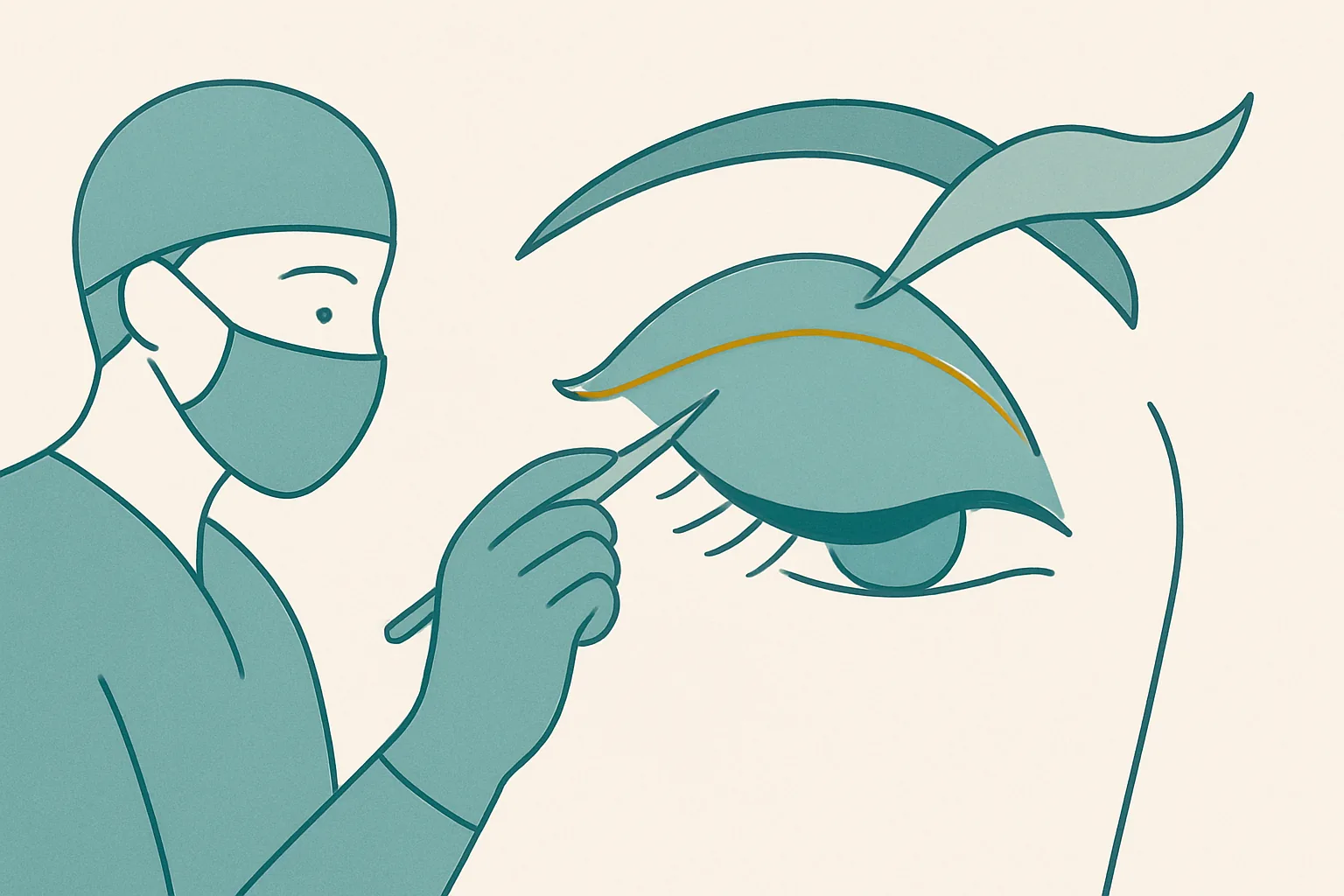
Blepharoplasty is performed under local or general anaesthesia. For the upper eyelids, incisions are made along the natural fold, excess skin, fat and muscle are removed, and the incision is closed. For the lower eyelids, the incision extends beyond the outer corners of the eyes; again, excess skin and muscle are removed, while fat is either removed or redistributed.
Where the upper eyelids droop excessively (ptosis), a further ptosis correction can be performed in combination with blepharoplasty.
Most eyelid ptosis procedures are carried out using a local anaesthetic to numb the eyes, together with an intravenous sedative to help you relax. After the operation you will spend a short time in recovery before going home the same day.
Related conditions